
Compassion in Action: The Science of Caring
The word “compassion” is derived from Latin roots: com- meaning “with, together” and pati/passio meaning “to suffer, endure.”
Having compassion is a core human value: It is the awareness of another person’s suffering, combined with a genuine wish and intention to help relieve that suffering. It also helps create more supportive relationships and communities.
This one-day symposium brought together esteemed scientists, public health experts, and the visiting monastics from the Plum Village tradition to explore how evidence-based mindfulness and compassion practices can help improve individual and population health, with particular attention to how cultivating compassion—in ourselves, our communities, and our planet—can serve as a powerful force for healing and transformation.
Please enjoy this recording of select symposium presentations:
Jump to: Schedule | Speakers & Facilitators
Symposium Schedule
Arrival
- 8:00 – 9:00 a.m. ET Registration, Continental Breakfast, and Networking
Opening Session
[Livestream begins]
- 9:00 – 9:05 a.m. Sound of the Bell; Introduction to Mindful Breathing – Sr. Tri Nghiem
- 9:05 – 9:15 a.m. Welcome and Introduction – Walter Willett, Harvey Fineberg, and Trish Hart
- 9:15 – 9:30 a.m. Framing the Day – Jon Kabat-Zinn
Featured Presentations
9:30 – 10:00 a.m. Self-Compassion: Loving Others without Losing Ourselves – Chris Germer
As the Dalai Lama (2012) said, “Caring for others requires caring for oneself.” This talk will review the theory and research on self-compassion, why self-compassion matters, myths about self-compassion, and the relationship of self-compassion to mindfulness and compassion for others. It will close with two experiential exercises that can be easily integrated into everyday life.
10:00 – 10:30 a.m. From Embodied Awareness to Collective Transformation: A Contemplative Neuroscience and Practice Perspective on Self‑Transcendence and Spiritual Health – Jon Kabat-Zinn and David Vago
In this dialogue, David Vago and Jon Kabat‑Zinn explore how compassion emerges from embodied awareness and lived experience, and how it radiates outward in ripples that transform relationships, communities, and social systems. They clarify common confusions between empathy, sympathy, and compassion; discuss the science of compassion, self‑transcendence, and spiritual health; and reflect on how social adversity can either shut us down or motivate compassionate collective action. Together, they invite us to recognize that compassion begins in the heart of each person, yet is inherently interdependent and something we continually co‑create.
10:30 – 11:00 a.m. Community Is Essential for Global Compassion – Br. Phap Luu
The Plum Village tradition is a global community of mindfulness practice centers and monasteries that are undertaking a radical experiment in community living and wellness. By living together, practicing mindfulness every day, and sharing this through retreats and online programs, these communities show what kind of future is possible in the midst of increasing political polarization and the climate crisis. Rooted in the insight of interbeing—our deep connection with one another and with the Earth—this experiment offers a lived response to the challenges of our time. We are living what science tells us: community is essential for our resilience and well-being. In Plum Village, compassion in action is also an ethical practice: we learn to live in a way that reduces suffering and supports collective well-being.
In the Buddhist world, a community that practices mindfulness in a spirit of harmony and compassion is called a Sangha—and a Sangha can be our family, workplace, congregation, or any community where people listen with an open heart and support one another’s deepest aspirations. The practices of deep listening, loving speech, and beginning anew are key ways a Sangha learns to stay together, even when views differ, and to transform conflict into understanding.
In this presentation, Brother Phap Luu speaks about the global aspect of compassion as a path of interbeing and engaged practice. He draws on the lived experience of Sanghas becoming a refuge to those overwhelmed by fear, anxiety, and despair, helping to transform violence in the collective consciousness so that action can remain compassionate, peaceful, and steady. He also points to the practical task of building Sangha everywhere: cultivating a local network of support and practice right where we are, so communities can respond to climate disruption and social fragmentation with resilience.
Brother Phap Luu offers the Six Harmonies as a concrete framework for reconciliation and collective action. These harmonies can be applied to our own local network of friends and family to build community right where we are: harmony in living together; harmony in training; harmony in understanding; harmony in sharing resources (material support); harmony in speech, free from dispute; and harmony in mind, shared joy.
11:00 – 11:10 a.m. A Living Bridge: Integrating Contemplative Science and Practice – Eric Loucks
[Livestream ends]
Break
11:10 – 11:20 a.m.
Working Groups
11:20 a.m. – 12:20 p.m.
Facilitators: Brian Clancy, Tobias Esch, Cindy Leung, David Vago, Karen Young, and Monastics
Mindful Eating
- 12:20 – 12:30 p.m. EAT-Lancet Report Summary – Walter Willett
- 12:30 – 1:30 p.m. Lunch with Mindful Eating Instruction – Sr. Spiritual Discernment
Mindful Walking
- 1:30 – 1:35 p.m. History of the Emerald Necklace – Brett Otis
- 1:35 – 2:20 p.m. Monastic-Led Outdoor Mindful Walk – Br. Promise
Break
2:20 – 2:35 p.m.
Summary
- 2:35 – 2:45 p.m. Metta Matters – Trish Hart
- 2:45 – 3:35 p.m. Working Group Summaries and Next Steps – Group Facilitators
Closing Session
- 3:35 – 3:40 p.m. Closing Remarks – Harvey Fineberg
- 3:40 – 4:00 p.m. Namo Avalokiteshvaraya (Chant of Compassion) – All Monastics
Our speakers have been invited to share their personal perspectives. They do not speak for Harvard.
Symposium Speakers, Facilitators, & Staff
Featured Speakers
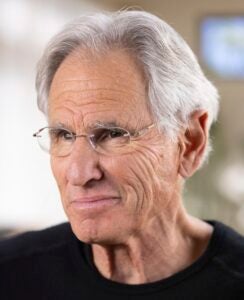 Jon Kabat-Zinn
Jon Kabat-Zinn, Ph.D. did his doctoral work in molecular biology at MIT in the laboratory of the Nobel Laureate, Salvador Luria. He is Professor of Medicine emeritus at the University of Massachusetts Medical School, where he founded the Center for Mindfulness in Medicine, Health Care, and Society (in 1995), and (in 1979) its world-renown Mindfulness-Based Stress Reduction (MBSR) Clinic. He is the author of 15 books, the most recent of which are Mindfulness Meditation for Pain Relief (2023), and a Thirtieth Anniversary Edition of Wherever You Go, There You Are 2024). Others include Full Catastrophe Living, Wherever You Go, There You Are, and Mindfulness for Beginners. In 2018/2019, he published a series of four volumes updating and expanding the 2005 edition of Coming to Our Senses: Meditation is Not What You Think; Falling Awake; The Healing Power of Mindfulness; and Mindfulness for All. His books are published in over 45 languages. His work has contributed to a growing movement of mindfulness into mainstream institutions such as medicine, psychology, health care, neuroscience, schools, higher education, business, social justice, criminal justice, prisons, the law, technology, government, and professional sports. Over 700 hospitals and medical centers around the world now offer MBSR. Jon lectures and leads mindfulness workshops and retreats around the world and online. In the Spring of 2020, at the start of the Covid-19 pandemic, he offered 66 consecutive weekdays of 90 minute online guided meditations, talks, and dialogue, the so-called mitigation retreat: see https://www.youtube.com/watch?v=RqkYJfT8gsw. His website is https://www.jonkabat-zinn.com.
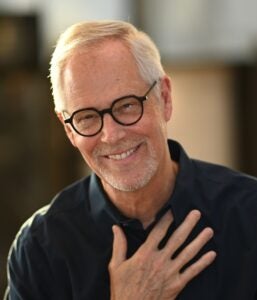 Chris Germer
Chris Germer, PhD is a clinical psychologist and lecturer on psychiatry (part-time) at Harvard Medical School. He co-developed the Mindful Self-Compassion (MSC) program with Kristin Neff in 2010 and they wrote three books: The Mindful Self-Compassion Workbook, Mindful Self-Compassion for Burnout, and Teaching the Mindful Self-Compassion Program. MSC has been taught to over 250,000 people in 30 different languages.
Dr. Germer is a founding faculty member of the Center for Mindfulness and Compassion, Harvard Medical School at the Cambridge Health Alliance, and the Institute for Meditation and Psychotherapy. He is also the author of The Mindful Path to Self-Compassion and Self-Compassion for Shame (coming September 2026). He co-edited two influential volumes on therapy: Mindfulness and Psychotherapy, and Wisdom and Compassion in Psychotherapy, and he has a small psychotherapy practice in Cambridge, Massachusetts.. Mostly, Chris spends his time teaching, writing and supporting MSC teachers around the world through the Center for MSC. www.chrisgermer.com www.centerformsc.org
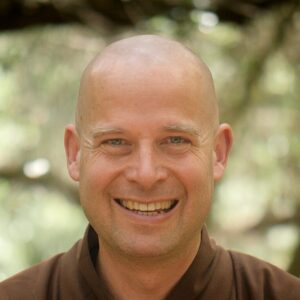 Brother Phap Luu
Ordained as a monk since 2003, Brother Phap Luu (Brother Stream) received Transmission of the Lamp from Zen Master Thich Nhat Hanh to teach in 2011. He helped start Wake-Up, the international movement for young people, as well as the Happy Farm, Plum Village’s organic farming community, and has been working with Wake-Up Schools since its inception in 2012 to bring mindfulness to schools. He has served as a monastic editor several of Thich Nhat Hanh’s books including Happy Teachers Change the World, Stepping into Freedom, Cracking the Walnut, The Admonitions and Encouraging Words of Master Guishan, and How to Focus. Brother Phap Luu leads mindful backpacking retreats in nature around Deer Park Monastery in Escondido, California and has been working lately with scientists at Dartmouth College and Harvard T.H. Chan School of Public Health to develop research on the effect of Plum Village mindfulness practices on children. Brother Phap Luu serves on the Advisory Board of the Thich Nhat Hanh Center for Mindfulness in Public Health at the Harvard T.H. Chan School of Public Health.
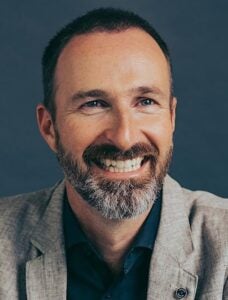 Eric B. Loucks
Eric B. Loucks, PhD, is a professor, researcher, and innovator in the study of mindfulness and health. As Director of the Mindfulness Center at Brown University, he leads efforts to advance the science and application of mindfulness-based practices to improve well-being and address public health challenges. Loucks developed the Mindfulness-Based College for Young Adults (MB-College) program and the Mindfulness-Based Blood Pressure Reduction (MB-BP) program, both of which have been rigorously evaluated through NIH-funded randomized controlled trials. His research encompasses mindfulness epidemiology, evidence synthesis, and implementation science, with a focus on translating mindfulness research into practical tools that support health and well-being. During his career, Loucks held teaching positions at Harvard, McGill, and Brown Universities. His work has been featured in prominent media outlets, such as The New York Times, TIME Magazine, and the BBC. He has provided numerous presentations to national and state governmental bodies. Committed to bridging rigorous science with real-world impact, Loucks empowers individuals and communities to thrive through mindfulness practices where evidence supports their efficacy.
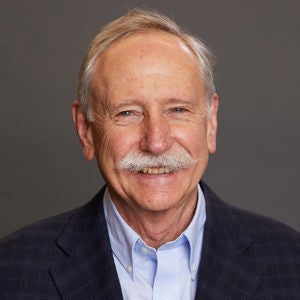 Walter C. Willett
Walter C. Willett, MD, MPH, DrPH, is director and member of the Advisory Board of the Thich Nhat Hanh Center for Mindfulness in Public Health and Professor of Epidemiology and Nutrition at the Harvard T.H. Chan School of Public Health. He was the chair of the department of nutrition from 1991 to 2016. Willett studied food science at Michigan State University and graduated from the University of Michigan Medical School before obtaining a Masters and Doctorate in Public Health from Harvard T.H. Chan School of Public Health. Willett has focused much of his work over the last forty years on the development and evaluation of methods, using both questionnaire and biochemical approaches, to study the effects of diet on the occurrence of major diseases. He has applied these methods starting in 1980 in the Nurses’ Health Studies I and II and the Health Professionals Follow-up Study. Together, these cohorts that include nearly 300,000 men and women with repeated dietary assessments, are providing the most detailed information on the long-term health consequences of food choices. Willett has published over 2,200 original research papers and reviews, primarily on lifestyle risk factors for heart disease, cancer, and other conditions and has written the textbook, Nutritional Epidemiology, published by Oxford University Press, now in its third edition. He also has written four books for the public including: Eat, Drink and Be Healthy: The Harvard Medical School Guide to Healthy Eating, which has appeared on most major bestseller lists; The Fertility Diet co-authored with Jorge Chavarro and Pat Skerrett. Willett is the most cited nutritionist internationally and is among the five most cited persons in all fields of clinical science. He is a member of the National Academy of Medicine, the National Academy of Sciences, and the recipient of many national and international awards for his research.
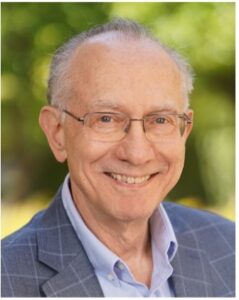 Harvey V. Fineberg
Harvey V. Fineberg, MD, PhD, co-chair of the Thich Nhat Hanh Center for Mindfulness in Public Health Advisory Board and president of the Gordon and Betty Moore Foundation. He previously served as president of the U.S. National Academy of Medicine (previously Institute of Medicine), as provost of Harvard University, and as dean of the Harvard T.H. Chan School of Public Health. Prior to joining a philanthropic foundation, he devoted most of his academic career to the fields of health policy and medical decision-making. His past research has focused on global health, assessment of medical technology, evaluation and use of vaccines, response to pandemics, and dissemination of medical innovations. Fineberg previously chaired the boards of the Carnegie Endowment for International Peace and the William and Flora Hewlett Foundation. He chairs the boards of the Science Philanthropy Alliance and the CMB Foundation, and served on the boards of the Josiah Macy, Jr. Foundation and the Association FXB (USA). He helped found and served as president of the Society for Medical Decision Making. Fineberg serves on the editorial board of the New England Journal of Medicine and in several advisory capacities, including the foresight committee of the Veolia Environment Institute and the scientific advisory board of the Singapore National Research Foundation. He chairs the advisory board of the Peterson Center on Healthcare, co-chairs the inaugural international advisory board of Tsinghua University Vanke School of Public Health and chairs the U.S. National Academies standing committee on emerging infectious diseases and 21st-century health threats. Fineberg is co-author of the books Clinical Decision Analysis, Innovators in Physician Education, and The Epidemic That Never Was: An Analysis of the Controversial U.S. Immunization Program Against Swine Flu in 1976. He has co-edited books on such diverse topics as AIDS prevention, vaccine safety, understanding risk in society, and global health and has authored numerous articles published in professional journals. Fineberg is the recipient of several honorary degrees, including the Frank A. Calderone Prize in Public Health, and the Henry G. Friesen International Prize in Health Research.
 Trish Hart
Trish Hart is the Senior Program Manager for the Thich Nhat Hanh Center for Mindfulness in Public Health at the Harvard T.H. Chan School of Public Health, where she leads the coordination and implementation of the Center’s core programs. She partners with faculty, staff, and community organizations to advance strategic initiatives and develop mindfulness-based offerings that integrate research, education, and community engagement in support of public health and population well-being.
She is also the founder of Hart Mind Body, a workplace well-being and integrative health consultants, with an MBA from Boston University and advanced training in mindfulness, sleep coaching, yoga, and stress resiliency. Drawing on prior roles at Deloitte, Massachusetts General Hospital, and Beth Israel Deaconess Medical Center, Trish brings experience across corporate, healthcare, and academic settings to her work. She designs and facilitates evidence-informed mind–body programs, lectures widely, and leads trainings and retreats nationally and internationally, integrating mindfulness, movement, and nature-based practices.
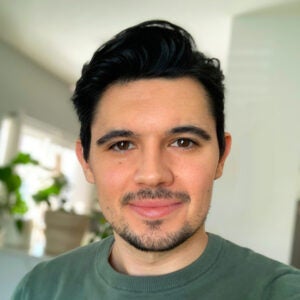 Brett O. Otis
Brett O. Otis, ALM, is the Communications Project Manager in the Department of Nutrition at the Harvard T.H. Chan School of Public Health. He serves as managing editor of The Nutrition Source—the department’s public-facing website providing science-based guidance for healthy living. He also provides strategic communications support for other departmental initiatives, and for the Thich Nhat Hanh Center for Mindfulness in Public Health. He is also part of the Minding our Future research team, an ongoing innovative multi-domain mindfulness and lifestyle intervention to promote healthy aging. Additionally, Brett is a co-author of Eat Well and Keep Moving (3rd edition, 2016), a school-based nutrition and physical activity program for upper-elementary school children.
Merging education and training in journalism, health communication, and sustainability, along with professional experience in public health nutrition communication, his work centers on making research accessible and actionable for a diverse audience—including policymakers, educators, and the public. He regularly lectures on these topic areas, with a particular focus on public perceptions of nutrition and health, the influence of social media, and misinformation. Outside of his work at the School, Brett volunteers for an urban agriculture project aiming to expand food production capacity and increase local food security on the North Shore of Massachusetts.
Working Group Facilitators
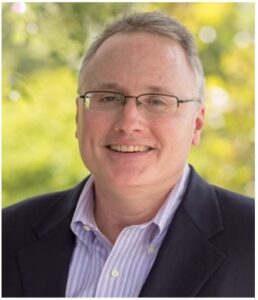 Brian Clancy
Brian Clancy, MBA, attended his first retreat with Thich Nhat Hanh and Sister Chan Khong in 2002. After graduating from Cornell University and the Harvard Business School, Clancy spent the first chapter of his career in the financial services industry. Among other roles, he served as the Chief Financial Officer for Fidelity Management and Research. Fifteen years ago, he shifted his focus to global poverty alleviation by working with microfinance pioneer Accion International and co-founding the Center for Financial Inclusion. Clancy also served as the President of the Boston Public Library Foundation and the chair of the library’s Special Collections Committee. Most recently he co-founded Citizen Connect – an online platform that amplifies the work of over 600 civic renewal organizations seeking to address political polarization.
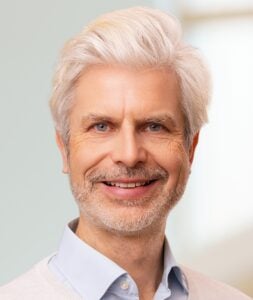 Tobias Esch
Tobias Esch, MD, is a Harkness Senior Fellow (New York) and tenured professor of medicine and director of the Institute for Integrative Health Care at Witten/Herdecke University, Germany (since 2016). He is also founder and first director of the University Clinic for Integrative Health Care at Witten; co-founder and co-chair Mind Body Medicine Research Council (Witten, Baltimore); co-chair Academic Consortium for Integrative Medicine and Health (Germany); partner OpenNotes collaborative, Harvard Medical School and Beth Israel Deaconess Medical Center.
Prior to his current appointments, Dr. Esch was also a visiting professor of medicine at Harvard Medical School (2013-2015); co-chair and fellow at Salzburg Global Seminars (2017); and Research Affiliate with the Neuroscience Research Institute at State University of New York (College at Old Westbury, New York: 2001-2016) He also worked as professor for integrative health promotion at Coburg University of Applied Sciences, Germany (2006-2015), and as postdoctoral research fellow in medicine at Harvard Medical School (Beth Israel Deaconess Medical Center, Division of Behavioral Medicine: 2000-2002), as well as clinical/research fellow at the Charité – University Medicine Berlin (2002-2005).
As a board-certified family physician with a strong background in primary care/general internal medicine, neurobiology and psychology, including basic research, Esch has focused his work on health promotion, patient activation, neuroscience and behavior change, including mind/body medicine, meditation research and mindfulness, and has published over 350 peer-reviewed articles in journals such as PLoS ONE, BMJ, NEJM Catalyst, Brain Research, Biology, JAMA Internal Medicine, etc.. In addition, he is the author of more than ten books (including #1 national bestseller or nomination for “Science Book of the Year”, etc.) and numerous book chapters.
Esch is co-editor and associate editor at various scientific journals, such as Frontiers in Behavioral Neuroscience or The MIND – Bulletin on Mind-Body Research, and sits on numerous editorial and institutional boards.
Esch received his medical degree from the University of Goettingen in Germany.
 Cindy Leung
Cindy Leung, ScD, MPH is an Associate Professor of Public Health Nutrition at the Harvard T.H. Chan School of Public Health. Trained as a nutrition epidemiologist, her research focuses on understanding diet-related health disparities and their underlying mechanisms in populations across the life course. In addition, she has conducted several studies on the effectiveness of mindfulness lifestyle interventions and the relationship between mindful eating and diet quality. She is an integral member of the Minding our Future project team, an ongoing innovative multi-domain mindfulness and lifestyle intervention to promote healthy aging. The ultimate goal of her research is to inform the development of policies and programs that can better promote food security and health equity for all. Dr. Leung has held faculty positions at the University of California, Berkeley, and the University of Michigan. In 2025, she was awarded the Excellence in Nutrition Fellow of the American Society for Nutrition.
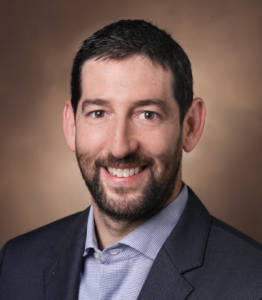 David Vago
David R. Vago, PhD, is a contemplative neuroscientist and internationally recognized leader in contemplative science, digital health, and well-being. For over two decades, he has investigated the neurobiological and psychosocial mechanisms by which meditation, yoga, breathwork, and psychedelic-assisted therapies modulate mind–brain–body interactions. His work includes close to 100 peer-reviewed publications and has been widely cited and covered by major media outlets, including the NY Times, Boston Globe, Washington Post, Newsweek, Scientific American, and NPR. Dr. Vago serves as President of the International Society for Contemplative Research, where he leads global efforts to advance rigorous, interdisciplinary scholarship at the intersection of basic neuroscience, clinical science, philosophy, and contemplative studies. He is a Research Associate in the Department of Psychiatry at Brigham and Women’s Hospital, Harvard Medical School, and a Mind & Life Fellow, having previously served as Senior Scientist and Research Director at the Mind & Life Institute. Previously, Dr. Vago was Associate Professor at Vanderbilt University Medical Center in Physical Medicine and Rehabilitation and in Psychiatry and Behavioral Sciences, core faculty in the Vanderbilt Brain Institute, Vanderbilt Institute for Infection, Immunology, and Inflammation, and Research Director of the Osher Center for Integrative Health. His academic training includes a BA in Brain and Cognitive Sciences from the University of Rochester, an MS and PhD in Cognitive and Neural Sciences (learning and memory) from the University of Utah, and postdoctoral fellowships in biological and social psychiatry, neuropsychiatric neuroimaging, and mind–body medicine at Harvard Medical School, Weill Cornell, and the University of Utah School of Medicine. As a scientific advisor and fractional chief science officer for academic and industry partners, he provides scalable research, strategy, and science-backed solutions for driving innovation and developing products that improve mental health and empower individuals to live with purpose and well-being.
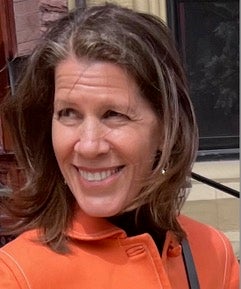 Karen Young
Karen is a community builder, social entrepreneur and strategic advisor who specializes in interdisciplinary collaboration and innovation. As co-founder and CEO of Sweet Readers, a public charity whose mission is to empower young people to discover the person behind the masks of aging and Alzheimer’s to become catalysts for Eldercare excellence, Karen, in collaboration with a multidisciplinary team developed the award winning Sweet Readers Method of Creative Human Engagement, helping to bridge over 50 communities in three countries and 11 US States. As co-founder and CEO of TLI Games, a global educational board game company, Karen spearheaded game development, corporate sponsorships, marketing, special events, manufacturing and distribution for twenty years. Karen serves as an advisor to the Thich Nhat Hanh School of Interbeing, AI Powered Women, anchored at MIT and is presently developing OWL* Evolution, a field guide for expansive seeing and living.
Staff
A special thank you to the following staff members in the Department of Nutrition who kindly volunteered to help with this symposium: Patrice Brown, Debbie Flynn, Luis Hernandez, Valerie Otulo, Jessie Powell, Hazel Seung, Katrina Soriano, Bo Wang, Amelia Zhang
Monastic Participants
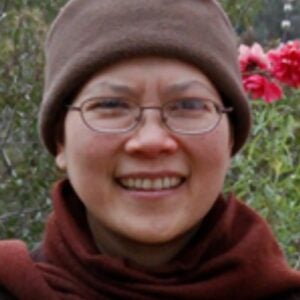 Sister True Fragrance
Sister Hương Nghiêm (True Fragrance) had participated in the second Winter Retreat to be held in Plum Village in November 1990 (and the first to be open to the general public) and later ordained as a novice nun in December 1992. In August 1994, she received full ordination in the first Great Ordination Ceremony held in Plum Village and became a Dharma Teacher after receiving the Lamp Transmission from Thầy in January 1999. She considers herself a lifelong student (always open to learning).
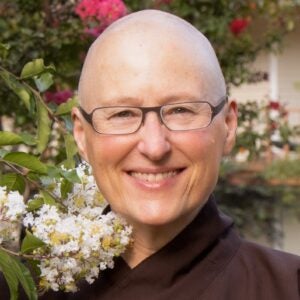
Sister Tree
Sister Trì Nghiêm (”Sister Tree”) (she/her) first encountered Thích Nhất Hạnh and his community of mindful living in southwest France in 2004. She was ordained into the monastic community in 2009 and received Lamp transmission to become a Dharma teacher in 2018. Sr Trì Nghiêm has toured widely with Thích Nhất Hạnh and the Plum Village Community of Engaged Buddhism, helping lead retreats in Europe, Asia, Australia, and the USA. A former English teacher, Sister Trì Nghiêm has been editing books by Thích Nhất Hạnh with Parallax Press since 2011. Originally from Australia, Sister Tri Nghiem has lived for long periods in Switzerland and France and currently lives and practices at Magnolia Grove Monastery in Mississippi.
Sister Shining Moon
Sister Trang Sang Soi (Sister Shining Moon) is a Vietnamese Buddhist monastic ordained in 2012. She first encountered the Plum Village tradition in the late summer of 2012 at Blue Cliff Monastery, while she was an international student living in New York. After listening to a Dharma talk by Zen Master Thich Nhat Hanh on the value of spiritual practice and monastic life, she was deeply touched and inspired to follow the monastic path, wishing to cultivate the values of peace and freedom that Thầy shared. Sister Shining Moon is a member of the Dharma Teacher Council and is involved in translating books and Dharma talks. She also helps care for the health program for Vietnamese monastics and looks after the bookstore at Deer Park Monastery. She helps organize retreats and events at the monastery. Through the online bookstore, she supports sharing practice materials with practitioners who are unable to come to the monastery. Grounded in daily practice, Sister Shining Moon nurtures her monastic life and the life of the Sangha. In her free time, she enjoys painting, flower arranging, and sharing the joy of cooking simple, nourishing meals with the community.
Brother Promise
Brother Chân Trời Nguyện Ước (Brother Promise) is a monastic of the Plum Village tradition. He is Vietnamese, born in 1995. He began his monastic training in 2012, received the novice (Śrāmaṇera) precepts on April 28, 2013, at the age of 18, and received full ordination on March 23, 2016. In 2023, he received lamp transmission and was appointed as a Dharma teacher at the Trừng Quang Great Ordination Ceremony held at Plum Village Thailand. He is the 804th disciple of Thầy in the Plum Village lineage. Over 13 years of practice within the Plum Village Sangha, he has served in many different capacities, including the Visa Team, Care Taking Council, Finance and Treasury Team, Education Board, youth program facilitation, and the editorial team of the Buddhist Studies journal at Plum Village Thailand. In August 2025, he was permitted by the Sangha to transfer to Deer Park Monastery in the United States for a period of two years. He experiences great happiness in this new practice environment—being immersed in nature, taking on new responsibilities, learning a new culture, and contributing his efforts to the work of spreading the mindful way of life in Western society.
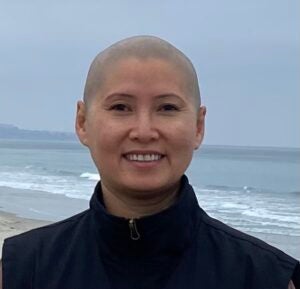
Sister Plum Park Moon
Sister Trang Mai Vien (Sister Plum Park Of The Moon) ordained at Plum Village in France in 2016. She currently resides at Deer Park Monastery in California. She fell in love with Zen Master Thich Nhat Hanh’s teachings after reading “The Five Contemplations Before Eating”. Her aspiration as a nun is to nourish and grow all the wholesome seeds in the garden of the traditional 51 mental formations.
To stay on top of on all our news, subscribe here for email updates.
Subscribe